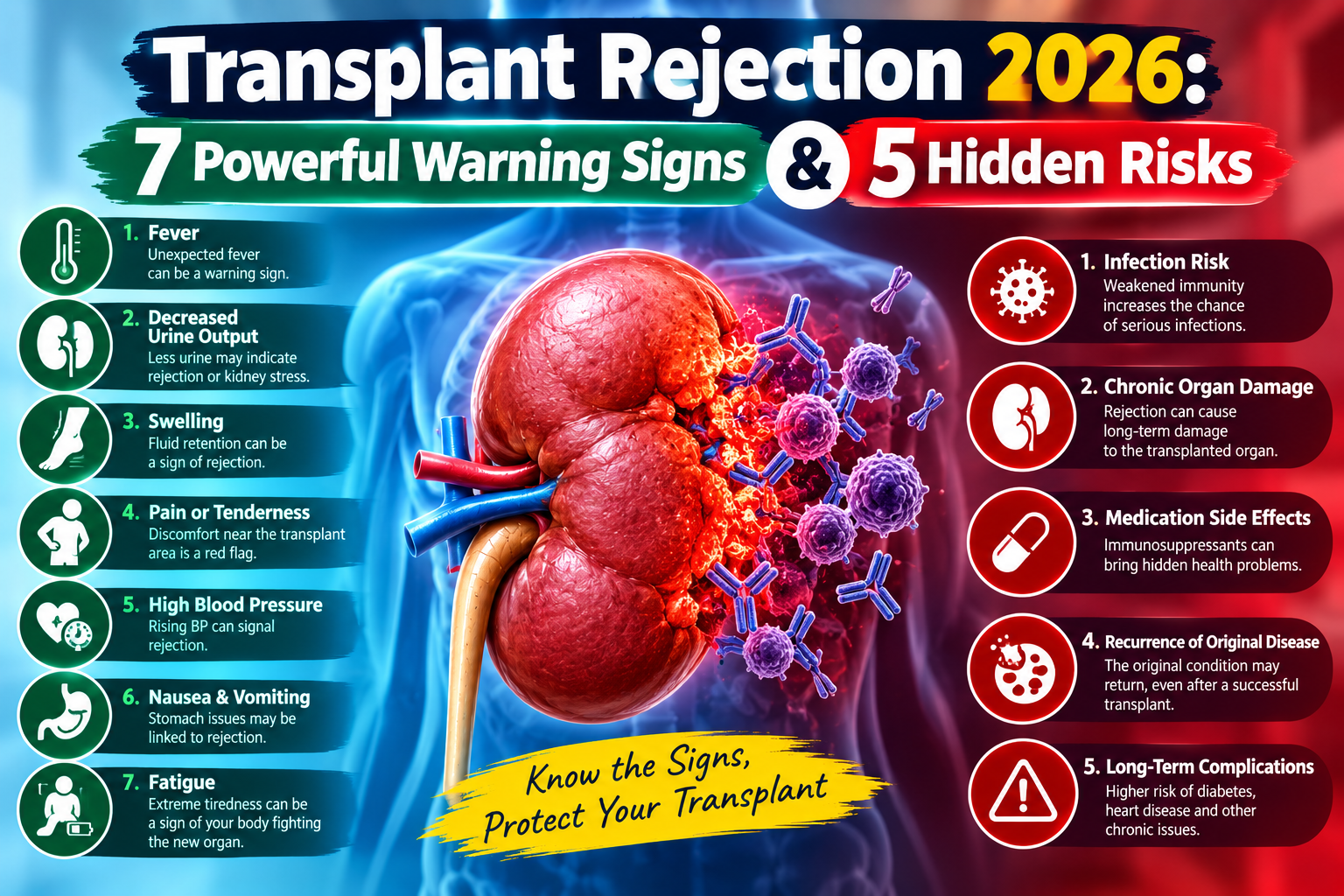

Transplant Rejection 2026 is an important topic for people who have received an organ transplant or want to understand the possible challenges after transplantation. Rejection happens when the immune system recognizes the transplanted organ as foreign and starts attacking it. Learning the warning signs can help patients seek medical advice early and protect their long-term health Transplant Rejection 2026.
Table of Contents
- What Is Transplant Rejection?
- 7 Powerful Warning Signs
- 5 Hidden Risks
- Diagnosis and Monitoring
- Treatment and Prevention
- Recovery and Long-Term Care
- Future Outlook
- FAQs
- Conclusion
What Is Transplant Rejection?
After an organ transplant, the body’s immune system may identify the new organ as something that does not naturally belong to the body. The immune system is designed to recognize and attack foreign substances, so it can sometimes respond to a transplanted organ in the same way Transplant Rejection 2026.
This immune response is known as rejection. It can occur with different types of transplants, including kidney, liver, heart, and lung transplantation.
The timing and symptoms can vary between patients. Some people may experience noticeable symptoms, while others may first show changes through blood tests or other medical examinations.
Modern transplant care uses regular monitoring and medicines that help control the immune response. This makes early awareness an important part of long-term care.
7 Powerful Warning Signs

The signs of rejection can be different depending on the transplanted organ. A symptom does not automatically mean rejection because infections, medicines, and other health conditions can cause similar problems.
However, unusual changes should be reported to the transplant care team Transplant Rejection 2026.
1. Unusual Tiredness
Unexpected or persistent tiredness can sometimes indicate that the body is dealing with a health problem. If fatigue suddenly becomes stronger than normal, it is worth discussing with a healthcare professional.
2. Fever or Chills
Fever and chills may occur because of infection or other complications. Transplant patients often take medicines that reduce immune activity, so unexplained fever should receive medical attention Transplant Rejection 2026.
3. Pain or Discomfort
New pain near the transplanted organ can be a reason to contact the transplant team. The location and intensity of discomfort can differ according to the type of transplant.
4. Changes in Urination
For kidney transplant recipients, changes in urination can be important. Reduced urine output or unusual urinary changes should be discussed with a healthcare professional, especially when combined with other symptoms.
5. Swelling
Swelling in the legs, hands, face, or other areas can have many causes. However, new or unexplained swelling should not be ignored after an organ transplant.
6. Changes in Organ Function
Sometimes rejection does not create obvious symptoms. Instead, medical tests may show that the transplanted organ is not functioning as expected.
Regular testing can help doctors notice these changes earlier Transplant Rejection 2026.
7. Sudden Health Changes
Unexpected weakness, appetite changes, nausea, breathing difficulties, or other sudden health changes may require professional evaluation.
Patients should not try to diagnose rejection by themselves because similar symptoms can have many different causes Transplant Rejection 2026.
5 Hidden Risks
Understanding the possible risks can help patients take their follow-up care seriously. Rejection is one of several complications that can occur after transplantation.
1. Organ Damage
A strong or untreated immune response may damage the transplanted organ. The amount of damage depends on factors such as the type of rejection and how quickly it is identified.
2. Reduced Organ Function
Rejection can interfere with the normal function of an organ. Regular medical tests can help identify changes in function before they become more serious Transplant Rejection 2026.
3. Long-Term Medicines
Most transplant recipients need medicines that suppress parts of the immune system. These medicines are important for reducing rejection risk, but they can also have side effects and require careful monitoring.
4. Infection Concerns
Immune-suppressing medicines can make it harder for the body to fight certain infections. Doctors therefore need to balance rejection prevention with infection protection.
5. Possible Transplant Failure
Severe or uncontrolled rejection can contribute to failure of a transplanted organ. This is one reason why regular appointments and correct use of prescribed medicines are so important Transplant Rejection 2026.
Warning Signs and Monitoring Table
| Area | Why It Matters |
|---|---|
| Fever or chills | May require evaluation for infection or other complications |
| Pain | Can signal a problem that needs medical assessment |
| Urine changes | Particularly important for kidney transplant patients |
| Swelling | May indicate changes that require evaluation |
| Blood tests | Can help monitor organ function |
| Regular appointments | Support long-term transplant monitoring |
This table is for general education. Monitoring requirements can differ depending on the transplanted organ and the individual patient’s condition.
Simple Visual Comparison
The following chart is illustrative only. It does not represent actual medical percentages or clinical statistics. It shows areas that may deserve attention during long-term transplant care Transplant Rejection 2026.
Diagnosis and Monitoring
Doctors do not diagnose rejection from one symptom alone. They consider the patient’s medical history, symptoms, medication use, laboratory results, and the condition of the transplanted organ.
Blood tests can help identify changes in organ function. Depending on the organ and situation, doctors may also use imaging or other specialized tests. In some cases, a biopsy may be needed to investigate the transplanted organ more closely.
Regular monitoring is important even when a patient feels healthy. Some problems may be detected through medical tests before noticeable symptoms develop.
Treatment and Prevention
Treatment depends on the type and severity of rejection and the organ involved. Doctors may change or adjust immune-suppressing medicines or use additional treatment when appropriate Transplant Rejection 2026.
Prevention mainly involves following the transplant team’s instructions. Taking medicines at the correct time, attending follow-up appointments, completing recommended tests, and reporting unusual symptoms can support better long-term care.
Patients should never stop or change anti-rejection medicines without medical advice.
Recovery and Long-Term Care
Life after transplantation requires continued attention. Recovery does not simply end when the initial surgery is complete.
Patients generally need regular medical appointments and ongoing medication management. A healthy routine can also include following recommended nutrition guidance, maintaining suitable physical activity, practicing infection-prevention habits, and communicating openly with healthcare professionals.
Emotional well-being also matters. The uncertainty surrounding transplantation can sometimes create stress. Talking with healthcare professionals or trusted support networks may help patients manage these concerns.
Future Outlook
The future of transplant medicine is increasingly focused on earlier detection and more personalized care Transplant Rejection 2026.
Researchers are exploring better ways to monitor immune activity and identify potential problems before significant organ damage occurs. Improvements in testing may help doctors understand individual rejection risk more precisely.
Personalized treatment could also allow doctors to adjust medicines according to a patient’s specific needs. However, these developments do not replace regular medical care or professional monitoring.
FAQs
What is Transplant Rejection 2026?
It refers to the immune system attacking a transplanted organ. The condition can occur at different times and may affect different types of transplanted organs Transplant Rejection 2026.
Can rejection happen without symptoms?
Yes. Some cases may not produce obvious symptoms at first. Regular medical tests can help identify changes in organ function.
Can rejection be treated?
In many cases, doctors can treat rejection by adjusting medicines or using other appropriate treatments. The approach depends on the individual situation.
Should anti-rejection medicine be stopped?
No. Patients should never stop or change prescribed anti-rejection medicines without speaking with their transplant team.
When should a patient contact the transplant team?
New, unusual, severe, or worsening symptoms should be discussed with the transplant care team. Prompt professional evaluation is especially important after transplantation.
Conclusion
Transplant rejection is an important concern after organ transplantation, but regular monitoring and proper medical care can help identify problems early. Warning signs such as fever, unusual tiredness, pain, swelling, changes in urination, or changes in organ function should receive appropriate medical attention.
The most important step is to maintain communication with the transplant team. Correct medication use, regular testing, follow-up appointments, and professional guidance can all help support the long-term health of a transplanted organ.