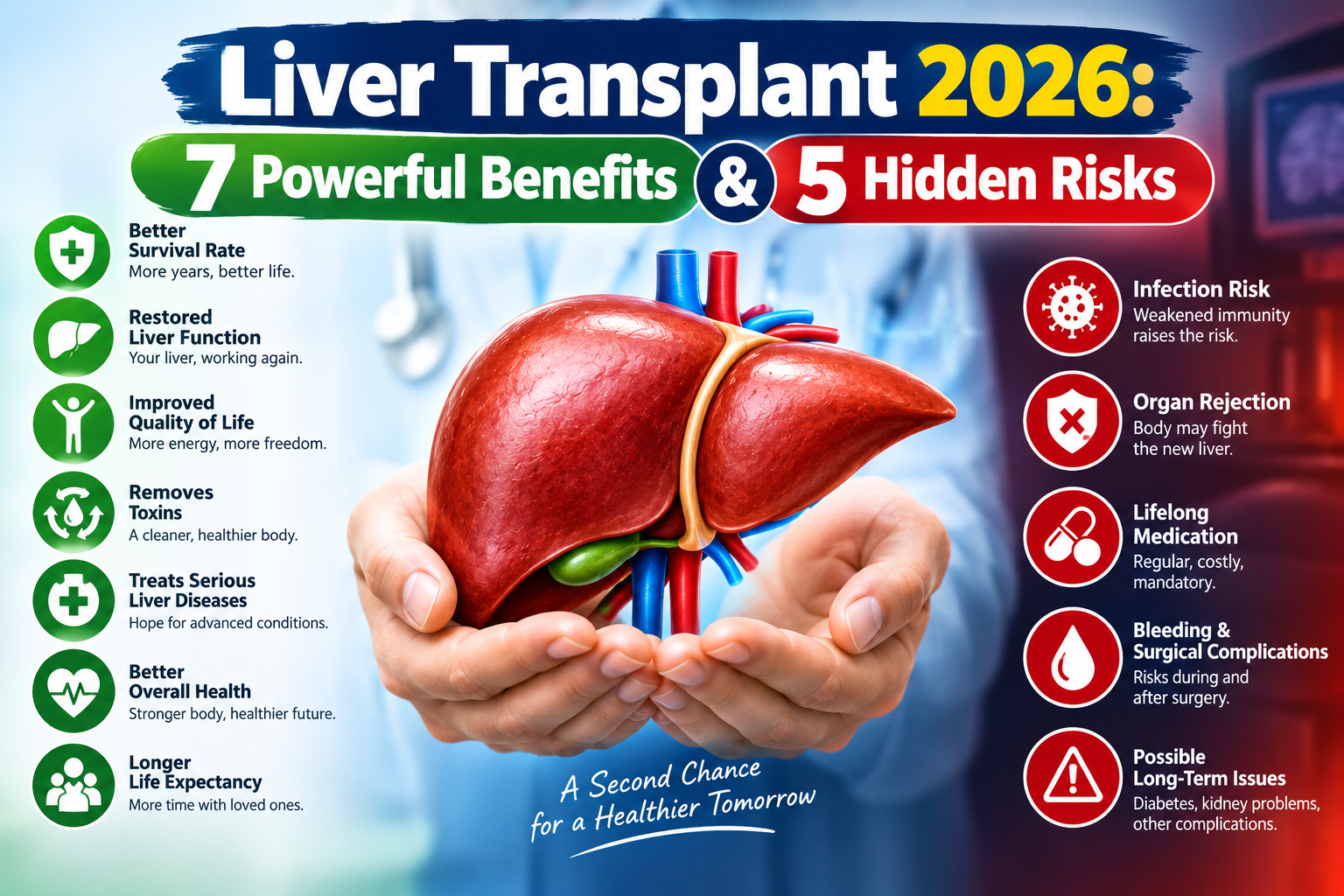

Liver Transplant 2026 is an important treatment option for people with severe liver disease, liver failure, or certain liver cancers. A successful transplant can replace a badly damaged liver with a healthy donor liver and give eligible patients a new opportunity for better health. Modern transplant care is also becoming more personalized, with improved donor matching, careful monitoring, and better long-term management. However, liver transplantation is major surgery and comes with important risks that patients should understand.
Table of Contents
- What Is Liver Transplant 2026?
- Liver Transplant 2026: 7 Powerful Benefits
- Liver Transplant 2026: 5 Hidden Risks
- Recovery and Long-Term Care
- Future of Liver Transplant 2026
- Conclusion
- FAQs
What Is Liver Transplant 2026?
Liver Transplant 2026 refers to current liver transplantation practices and developing approaches used to treat advanced liver disease. During a liver transplant, a diseased liver is replaced with a healthy donor liver. The donor may be a deceased person, or in some situations, part of a liver may come from a living donor.
The liver performs many important functions. It helps process nutrients, produces important proteins, supports digestion, stores energy, and helps remove harmful substances from the blood. When severe liver disease damages these functions, transplantation may become an option for carefully selected patients.
Before transplantation, doctors perform detailed medical tests to determine whether a patient is suitable. The team may assess liver disease severity, general health, blood type, possible infections, heart and lung health, and other factors. The process is complex because the transplant team needs to balance the potential benefits with the risks of major surgery.
Liver Transplant 2026: 7 Powerful Benefits
1. Liver Transplant 2026 Can Restore Liver Function
One of the biggest potential benefits of Liver Transplant 2026 is the replacement of a severely damaged liver with a functioning donor liver. A healthy liver can perform the essential jobs that the diseased liver can no longer perform effectively.
For patients with advanced liver failure, restoring liver function can be life-changing. The new liver may help the body process nutrients, produce proteins, regulate important substances, and remove waste products more effectively.
2. Liver Transplant 2026 May Improve Quality of Life
Severe liver disease can affect energy, appetite, mobility, sleep, and everyday activities. A successful transplant may improve these problems as the new liver begins functioning.
Quality-of-life improvement is one of the major reasons transplantation is considered for eligible patients. However, recovery takes time, and patients still require regular medical care after surgery.
3. Liver Transplant 2026 Can Offer a New Treatment Opportunity
For some people with advanced liver disease, other treatments may no longer provide enough control. In these situations, Liver Transplant 2026 can provide another treatment pathway.
Transplantation does not suit everyone, but carefully selected patients may benefit significantly. Doctors consider the cause and severity of liver disease before deciding whether transplantation is appropriate.
4. Liver Transplant 2026 May Help Patients Return to Daily Activities
A successful transplant can allow patients to gradually return to many normal activities after recovery. Work, family responsibilities, exercise, and social activities may become easier when liver function improves.
The recovery process varies considerably. Some people recover faster than others, and activity levels must be increased according to medical advice.
5. Liver Transplant 2026 Can Provide Long-Term Health Benefits
For appropriate candidates, transplantation can provide long-term benefits when the new liver functions well. Continued medical monitoring is important because the transplanted organ needs protection and careful management.
Long-term success depends on several factors, including the patient’s overall health, the condition of the donor liver, medication adherence, and follow-up care.
6. Liver Transplant 2026 Supports Personalized Treatment
A growing focus in Liver Transplant 2026 is personalized transplant care. Every patient has different medical circumstances, so doctors consider individual factors when planning treatment.
Better assessment before surgery and closer monitoring afterward can help transplant teams identify problems and adjust care. This personalized approach is especially important because transplantation involves both surgical and immune-related challenges.
7. Liver Transplant 2026 Can Improve Hope for Eligible Patients
Living with advanced liver disease can be physically and emotionally difficult. For eligible patients, transplantation can provide a meaningful treatment opportunity and the possibility of returning to a healthier daily routine.
The outcome is not guaranteed, but modern transplant care continues to focus on improving patient selection, surgical techniques, medication management, and long-term follow-up.
Liver Transplant 2026: 5 Hidden Risks
1. Liver Transplant 2026 Can Cause Organ Rejection
One of the most important concerns after Liver Transplant 2026 is rejection. The immune system may recognize the donated liver as foreign and attempt to attack it.
Patients usually receive immunosuppressive medicines to reduce this risk. These medicines are important, but they also require careful management because they can affect the body’s immune response.
2. Liver Transplant 2026 Can Increase Infection Risk
Immunosuppressive medicines can make it harder for the body to fight certain infections. This means transplant recipients need careful monitoring, particularly during the early recovery period.
Doctors may recommend specific precautions and regular testing. Patients should also report unusual symptoms quickly because early treatment can be important.
3. Liver Transplant 2026 Involves Major Surgical Risks
Liver transplantation is a major operation. Like other complex surgeries, it can involve complications such as bleeding, blood clots, infections, or problems involving blood vessels and bile ducts.
The transplant team closely monitors patients after surgery to identify complications as early as possible. The exact risks depend on the patient’s health and the circumstances surrounding the transplant.
4. Liver Transplant 2026 Requires Long-Term Medicines
A transplant does not mean that medical treatment ends after surgery. Many patients need long-term immunosuppressive medicines to protect the transplanted liver.
These medicines can have side effects. Depending on the medication and the patient’s health, doctors may need to monitor blood pressure, blood sugar, kidney function, cholesterol, and infection risk.
5. Liver Transplant 2026 Does Not Guarantee Permanent Success
A transplanted liver can function successfully for many years, but transplantation is not a guarantee of permanent health. Rejection, infections, complications, or recurrence of certain diseases can affect the outcome.
This is why long-term follow-up remains an essential part of Liver Transplant 2026. Patients need to continue medical appointments and take prescribed medicines even when they feel healthy.
Liver Transplant 2026: Benefits and Risks
| Area | Potential Benefit | Possible Risk |
|---|---|---|
| Liver function | Restores important liver functions | The new liver may develop problems |
| Quality of life | May improve daily activities | Recovery can be difficult |
| Treatment | Provides an option for severe liver disease | Not every patient is eligible |
| Long-term health | Can provide lasting benefits | Lifelong monitoring may be needed |
| Medication | Helps protect the transplanted liver | Side effects can occur |
| Immune system | Medicines reduce rejection risk | Infection risk can increase |
Liver Transplant 2026: Simple Visual Comparison
The following graph is an illustrative comparison of the major topics discussed in this article, not actual medical outcome percentages.
Liver Transplant 2026: Recovery and Long-Term Care
Recovery after Liver Transplant 2026 usually requires close medical supervision. After surgery, doctors monitor liver function, blood tests, medication levels, and possible complications. The early recovery period can be challenging because the body needs time to adjust to the transplanted organ.
As recovery continues, patients gradually return to normal activities. Healthy eating, appropriate physical activity, medication adherence, and regular medical appointments can all support long-term care.
Patients should never stop or change immunosuppressive medicines without speaking with their transplant team. Missing medication can increase the risk of rejection and other complications.
Long-term care is also important because transplant recipients may need monitoring for medication side effects, infections, blood pressure changes, and other health concerns.
Liver Transplant 2026: Future Outlook
The future of Liver Transplant 2026 is focused on improving patient outcomes and making transplantation safer. Researchers and transplant centers continue to study better donor selection, organ preservation, immune management, and personalized monitoring.
Living-donor transplantation is another important area because a suitable donor may provide an alternative to waiting for a deceased-donor organ. However, living donation requires careful medical evaluation to protect both donor and recipient.
New approaches to monitoring may also help doctors identify complications earlier. As transplant medicine develops, personalized treatment may become even more important in deciding which patients are most likely to benefit.
Conclusion
Liver Transplant 2026 can provide a powerful treatment opportunity for patients with severe liver disease and liver failure. A successful transplant may restore liver function, improve quality of life, and allow eligible patients to return to many normal activities.
At the same time, transplantation involves serious risks. Rejection, infection, surgical complications, medication side effects, and long-term health challenges must be considered before treatment.
The best decision depends on the individual patient. A qualified transplant team can evaluate medical history, liver disease, overall health, and potential risks before recommending transplantation.
FAQs About Liver Transplant 2026
What is Liver Transplant 2026?
Liver Transplant 2026 describes current liver transplantation treatment, care, and developing approaches during 2026.
Who may need a liver transplant?
People with severe liver failure, certain advanced liver diseases, or selected liver cancers may be considered for transplantation. Eligibility depends on individual medical evaluation.
Is liver transplant a permanent cure?
A transplant can provide long-term liver function, but it is not guaranteed to be permanent. Patients require ongoing monitoring and medical treatment.
What is a major risk after liver transplantation?
Rejection, infection, surgical complications, and medication side effects are important risks after transplantation.
Can patients live normally after a liver transplant?
Many transplant recipients can return to many normal daily activities after recovery, but they still need regular medical care and prescribed medicines.