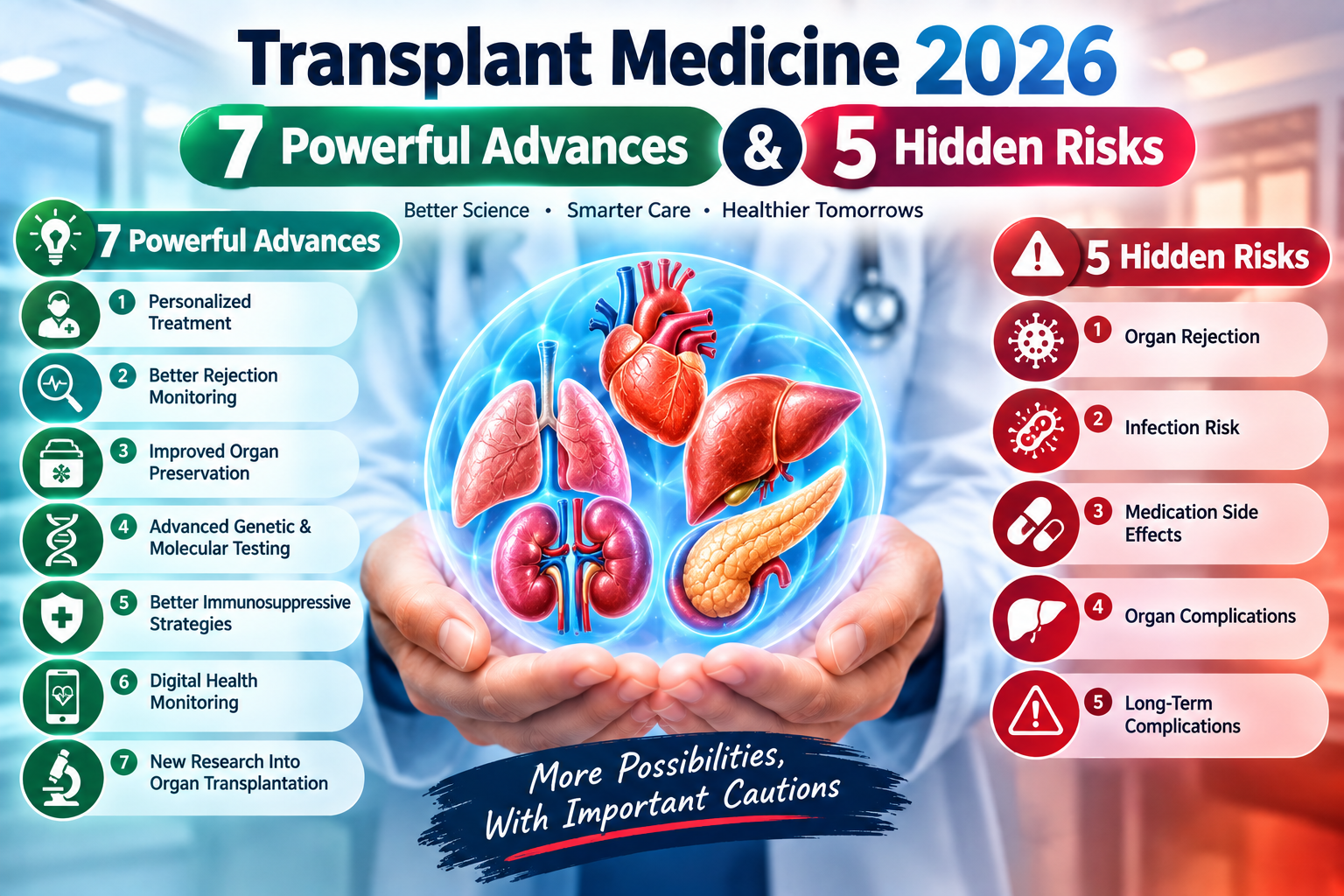

Transplant Medicine 2026 is becoming an important area of modern healthcare because new medical approaches are helping doctors improve organ transplantation, patient monitoring, medication management, and long-term care. From better testing to more personalized treatment, transplant medicine continues to develop. At the same time, important risks such as infection, medicine side effects, rejection, and organ complications still need careful attention Transplant Medicine 2026.
Table of Contents
- What Is Transplant Medicine 2026?
- 7 Powerful Advances
- 5 Hidden Risks
- Advances and Risks Table
- Monitoring and Personalized Care
- Future Outlook
- FAQs
- Conclusion
What Is Transplant Medicine 2026?
Transplant medicine focuses on the medical care of people before, during, and after organ transplantation. It involves areas such as organ matching, surgery support, immune-system management, medication, infection prevention, and long-term monitoring.
Modern transplant care is becoming more personalized. Doctors can use laboratory testing, imaging, clinical information, and other technologies to understand how an individual patient is responding to treatment.
The main goal is not only to complete a successful transplant but also to help the transplanted organ function well for as long as possible.
Transplant Medicine 2026: 7 Powerful Advances
1. More Personalized Treatment
One important development is the movement toward personalized transplant care. Patients can respond differently to the same medicine or treatment approach Transplant Medicine 2026.
Doctors can consider factors such as organ function, medical history, laboratory results, and medication response when developing a treatment plan. This can help make care more specific to the individual patient.
2. Better Rejection Monitoring
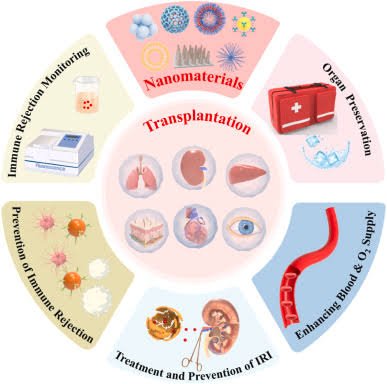
Organ rejection remains an important challenge after transplantation. Newer monitoring approaches are being studied to help doctors identify possible rejection earlier.
Traditional blood tests and other clinical assessments remain important, while researchers are also exploring additional biomarkers and testing methods. Earlier detection may allow treatment to be considered before serious organ damage develops.
3. Improved Organ Preservation
The period between organ donation and transplantation is extremely important. Better preservation methods can help maintain organ quality during transportation and preparation.
Research into machine perfusion and other preservation technologies has created new possibilities for evaluating and maintaining donated organs before transplantation.
These approaches may become increasingly important as transplant systems look for ways to use more organs safely.
4. Advanced Genetic and Molecular Testing
Genetic and molecular information can provide additional insight into how the body responds to transplantation Transplant Medicine 2026.
Researchers are studying molecular signals that may help identify immune activity or other changes related to transplant health. Such information could eventually support more accurate and individualized treatment decisions.
5. Better Immunosuppressive Strategies
After transplantation, patients commonly need medicines that reduce immune activity to lower the chance of rejection.
A major goal of modern care is to find the right balance. Too little immune suppression may increase rejection risk, while too much can increase concerns such as infection and medication-related complications.
Improved treatment strategies aim to provide effective protection while reducing unnecessary exposure to medication side effects.
6. Digital Health Monitoring
Digital health tools are becoming increasingly useful in healthcare. Remote communication, electronic health records, medication reminders, and connected monitoring technologies may support transplant follow-up.
These tools can make it easier for patients and healthcare teams to track important information and communicate about changes in health.
Digital tools do not replace medical professionals, but they can support ongoing care when used appropriately.
7. New Research Into Organ Transplantation
Research continues to explore ways to improve transplantation. Scientists are investigating immune tolerance, organ preservation, biomarkers, regenerative approaches, and other technologies Transplant Medicine 2026.
The long-term goal is to make transplantation safer, more predictable, and more accessible for suitable patients.
Transplant Medicine 2026: 5 Hidden Risks
Modern advances can improve transplant care, but they do not remove every medical risk. Understanding these challenges is important for patients and families.
1. Organ Rejection
Rejection occurs when the immune system attacks the transplanted organ. It can happen at different stages after transplantation Transplant Medicine 2026.
Regular follow-up and appropriate medicines are important because rejection can sometimes be detected through medical tests before major symptoms appear.
2. Infection Risk
Many transplant patients take immune-suppressing medicines. These medicines help reduce rejection but can also affect the body’s ability to fight certain infections.
Doctors therefore need to balance protection against rejection with infection prevention. Patients should follow their medical team’s advice about medicines, hygiene, vaccinations, and other preventive measures.
3. Medication Side Effects
Long-term medicines can produce side effects. The specific effects depend on the medicine, dosage, and individual patient.
Regular medical monitoring helps doctors evaluate whether a treatment continues to provide more benefit than risk. Patients should not change their medicine without professional guidance.
4. Organ Function Problems
Even when transplantation is initially successful, the transplanted organ may later experience problems.
Changes in organ function can have different causes. Regular blood tests, imaging, physical examinations, and other assessments can help doctors identify problems and respond appropriately.
5. Long-Term Health Challenges
Transplant patients may need long-term medical care. Maintaining medication schedules, attending appointments, monitoring organ function, and managing other health conditions can become part of everyday life.
This long-term responsibility can sometimes be challenging, but consistent follow-up remains an important part of transplant care.
Transplant Medicine 2026: Advances and Risks Table
| Area | Potential Benefit | Important Concern |
|---|---|---|
| Personalized treatment | More individual care | Treatment complexity |
| Rejection monitoring | Earlier detection | Not every test is definitive |
| Organ preservation | Better organ assessment | Technology limitations |
| Molecular testing | More detailed information | Requires further research |
| Immunosuppressive therapy | Helps reduce rejection | Infection and side effects |
| Digital monitoring | Easier follow-up | Privacy and technology access |
| Research advances | New treatment possibilities | Some approaches remain experimental |
This table provides a general educational overview. Individual transplant decisions should always be made with a qualified transplant team.
Transplant Medicine 2026: Monitoring and Personalized Care
Monitoring is one of the most important parts of modern transplant care. Doctors may use blood tests, imaging, medication reviews, physical examinations, and other assessments to understand how the transplanted organ is functioning.
Personalized monitoring can be particularly useful because every patient has a different medical history and may respond differently to treatment.
Patients can also play an important role by following their prescribed medication schedule and reporting unusual symptoms. However, self-monitoring should support—not replace—professional medical care.
Simple Visual Comparison
The chart below is illustrative only. It does not represent real clinical percentages or measured medical outcomes. It simply compares major areas of modern transplant care for educational purposes.
Transplant Medicine 2026: Future Outlook
The future of transplant care is likely to focus on earlier detection, personalized treatment, better organ preservation, and improved long-term monitoring.
Researchers are studying ways to understand the immune response more precisely. Better biomarkers may eventually help doctors detect problems earlier. Improvements in organ preservation may also expand the possibilities for transplantation.
Another important direction is reducing the burden of long-term treatment. Researchers are investigating whether some patients may eventually require less immune-suppressing medication while maintaining adequate protection against rejection.
However, many emerging approaches still require extensive research and clinical evaluation before they become routine treatments.
FAQs
What is Transplant Medicine 2026?
It refers to modern medical approaches used to support organ transplantation and long-term transplant care, including monitoring, medicines, organ preservation, and emerging technologies.
What is the biggest challenge after transplantation?
Rejection remains an important challenge, but infection, medication side effects, and long-term organ function are also major concerns.
Can transplant medicine become personalized?
Yes. Doctors already consider individual patient characteristics when planning treatment, and research continues to improve personalized approaches.
Why are anti-rejection medicines important?
These medicines help reduce the immune system’s attack on the transplanted organ. However, they can also have risks, so they require careful medical management.
Is new transplant technology safe for everyone?
Not necessarily. Some technologies are established, while others are still being researched. A transplant specialist can determine which approaches are appropriate for a specific patient.
Conclusion
Transplant Medicine 2026 is developing through advances in personalized treatment, rejection monitoring, organ preservation, molecular testing, immunosuppressive strategies, digital health, and transplantation research.
At the same time, important risks remain, including rejection, infections, medication side effects, organ function problems, and long-term health challenges. The best approach combines medical innovation with regular monitoring and professional care.
As research continues, future transplant treatments may become more personalized and precise. However, patients should always follow the guidance of their transplant team and never change prescribed treatment without medical advice.