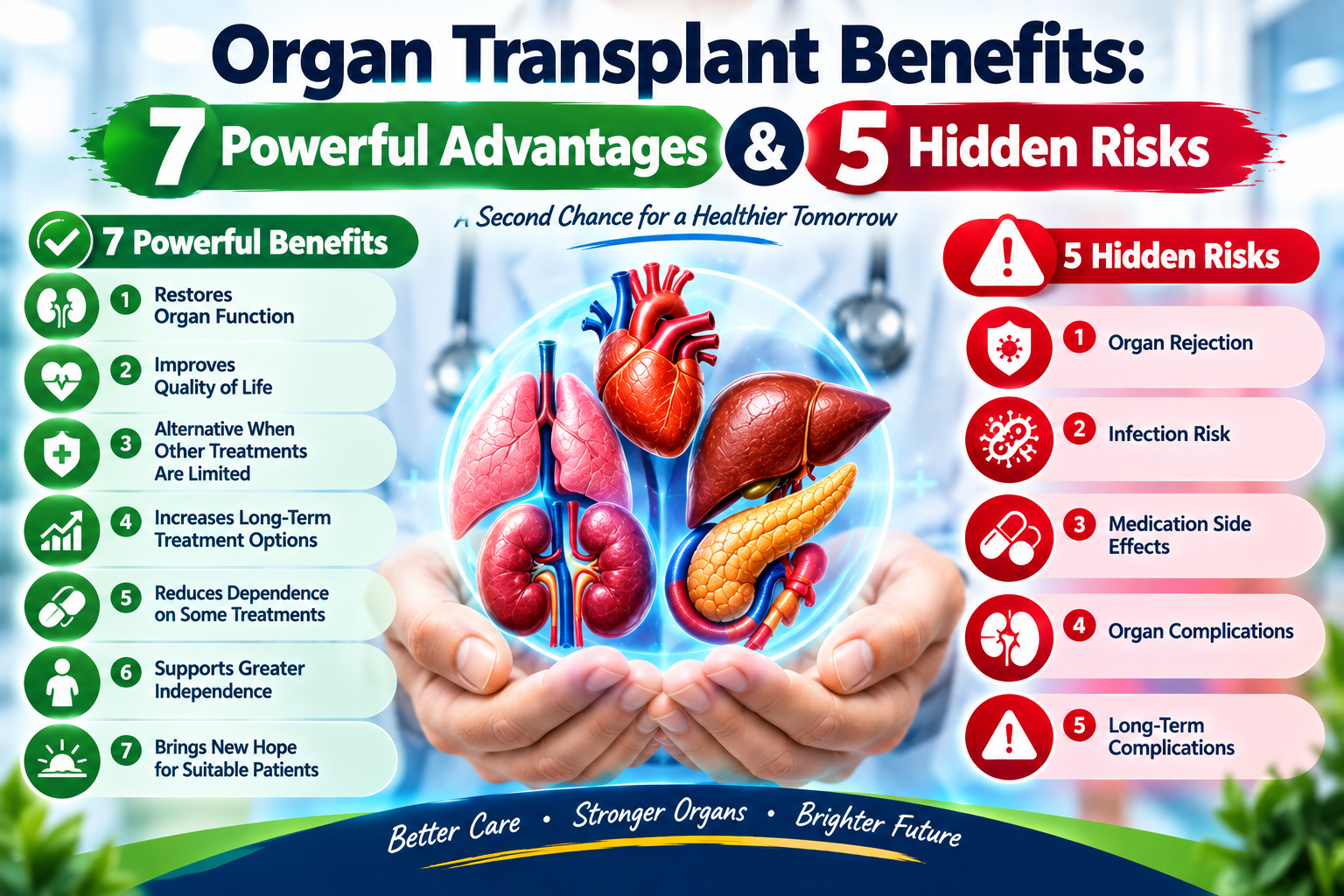

Organ Transplant Benefits are an important part of modern medical care because transplantation can give suitable patients an opportunity to improve organ function and quality of life. A transplant may be considered when an organ has become severely damaged and other treatments are no longer enough. However, transplantation is a major medical procedure, so its potential advantages must always be considered alongside possible risks.
Table of Contents
- What Is an Organ Transplant?
- 7 Powerful Organ Transplant Benefits
- 5 Hidden Risks
- Benefits and Risks Table
- Recovery and Long-Term Care
- Future of Organ Transplantation
- FAQs
- Conclusion
What Is an Organ Transplant?
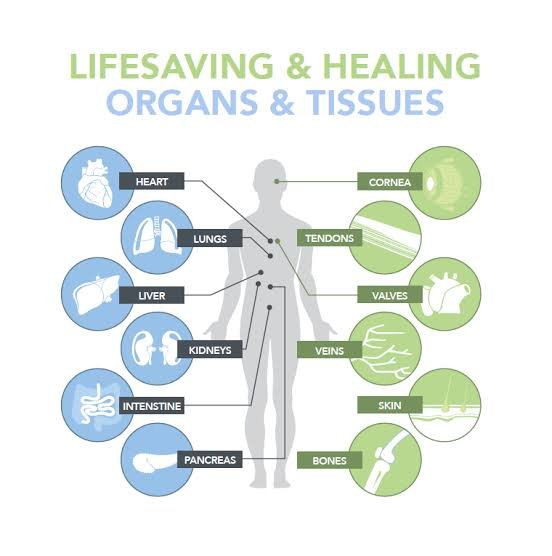
An organ transplant is a medical procedure in which a damaged or failing organ is replaced with a healthy organ from a donor. Depending on the situation, organs such as the kidney, liver, heart, lungs, pancreas, and intestine may be transplanted.
Transplantation can be considered when serious organ disease has reached a stage where other treatments cannot provide enough support. Before transplantation, medical teams carefully evaluate the patient’s overall health and whether the procedure is appropriate.
The process does not end with surgery. Patients generally require long-term monitoring, medicines, and follow-up care to help protect the transplanted organ.
7 Powerful Organ Transplant Benefits
1. Can Restore Important Organ Function
One of the biggest advantages of transplantation is the possibility of restoring important organ function. When a suitable transplanted organ begins working properly, it can perform functions that the patient’s damaged organ could no longer provide adequately.
The exact improvement depends on the organ involved and the patient’s individual medical condition.
2. May Improve Quality of Life
Severe organ disease can affect everyday activities, energy levels, independence, and emotional well-being. A successful transplant may reduce some of these limitations.
Patients may be able to participate more comfortably in daily activities after recovery, although the experience varies from person to person.
3. Can Provide an Alternative When Other Treatments Are Limited
For some patients with advanced organ failure, transplantation can provide another treatment option when standard therapies are no longer sufficient.
For example, transplantation can be considered in certain cases of advanced kidney, liver, heart, or lung disease. Medical teams carefully determine whether the potential benefits outweigh the risks.
4. May Increase Long-Term Treatment Options
A successful transplant can change the long-term management of serious organ disease. Instead of focusing only on supporting a failing organ, treatment can shift toward protecting the transplanted organ and maintaining overall health.
This can create new possibilities for patients who meet medical requirements for transplantation.
5. Can Reduce Dependence on Some Treatments
Depending on the type of transplant, a patient may be able to reduce or stop certain treatments that were necessary before transplantation.
For example, some kidney transplant recipients may no longer require dialysis when the transplanted kidney functions effectively. However, every patient has different needs, and transplant recipients generally still require ongoing medicines and monitoring.
6. Supports Greater Daily Independence
Serious organ disease can make patients dependent on frequent medical treatments or assistance with everyday activities.
After a successful recovery, some patients may experience greater independence. They may be able to return to work, education, family activities, or other normal routines depending on their health.
7. Can Offer New Hope for Suitable Patients
For people with severe organ failure, transplantation may offer an important new treatment opportunity. The possibility of receiving a functioning organ can provide hope when other options are limited.
However, transplantation is not suitable for everyone. Doctors consider medical history, overall health, organ availability, and many other factors before recommending the procedure.
5 Hidden Risks
Although the benefits can be significant, transplantation also involves serious risks. Understanding these risks helps patients make informed decisions with their healthcare teams.
1. Organ Rejection
The immune system may recognize a transplanted organ as foreign and attack it. This is known as rejection.
Anti-rejection medicines are commonly used to reduce this risk. Regular monitoring is also important because rejection may sometimes be detected through medical tests before major symptoms develop.
2. Infection Risk
Many transplant recipients need medicines that suppress parts of the immune system. These medicines help protect against rejection but can also make it harder for the body to fight certain infections.
Patients may therefore need careful infection-prevention strategies and regular medical monitoring.
3. Medicine Side Effects
Long-term anti-rejection medicines can cause side effects. The specific effects depend on the medicine and the individual patient.
Doctors monitor patients and may adjust treatment when necessary. Patients should never stop prescribed medicines without professional guidance.
4. Surgical Complications
Like other major surgeries, transplantation can involve complications. These may include bleeding, infection, blood clots, or problems related to anesthesia and the surgical procedure.
The exact risks depend on the organ being transplanted and the patient’s health.
5. Long-Term Health Challenges
A transplant can improve organ function, but it does not mean that medical care is finished. Patients usually require long-term follow-up, medicines, tests, and lifestyle guidance.
Maintaining this routine can sometimes be challenging, particularly when treatment continues for many years.
Benefits and Risks Table
| Area | Potential Advantage | Possible Concern |
|---|---|---|
| Organ function | May restore important function | Organ may not work as expected |
| Quality of life | May improve daily activities | Recovery can take time |
| Treatment options | Can provide another option for advanced disease | Not suitable for every patient |
| Independence | May reduce dependence on some treatments | Long-term care remains necessary |
| Rejection management | Modern medicines can reduce rejection risk | Medicines can have side effects |
| Long-term care | Regular monitoring supports organ health | Requires ongoing medical follow-up |
This table provides a general educational overview. Individual outcomes can vary significantly.
Simple Visual Comparison
The chart below is illustrative only. The values are not medical statistics or guaranteed outcomes. They simply show the major areas patients may consider when discussing transplantation.
Recovery and Long-Term Care
Recovery after transplantation can take time. The length of recovery depends on the transplanted organ, the patient’s health, the type of surgery, and other individual factors.
After surgery, patients usually require regular appointments and medical tests. Doctors monitor organ function and check whether medicines are working effectively.
Medication schedules are especially important. Anti-rejection medicines are generally taken regularly to help prevent the immune system from attacking the transplanted organ.
Lifestyle recommendations can also become part of long-term care. Patients may receive guidance about nutrition, physical activity, infection prevention, and other health habits.
Patients should contact their medical team when they experience unusual symptoms instead of trying to diagnose complications themselves.
Organ Transplant Benefits: Who May Benefit?
Not every person with organ disease is automatically a transplant candidate. Medical teams consider many factors before recommending transplantation.
Doctors may evaluate the severity of organ disease, overall health, other medical conditions, ability to follow long-term treatment, and other factors. The availability of a suitable donor organ is also an important part of the process.
The decision is therefore highly individual. A transplant specialist can explain whether the potential benefits are appropriate for a particular patient.
Future of Organ Transplantation
The future of transplantation is focused on improving donor-organ availability, preservation, matching, rejection monitoring, and long-term outcomes.
Researchers are studying technologies that may help preserve organs for longer periods and assess their condition before transplantation. Better monitoring methods may also help doctors detect rejection earlier.
Another area of research is immune tolerance. Scientists are investigating whether future treatments could help transplanted organs function with less dependence on long-term immune-suppressing medicines.
These developments are promising, but many emerging approaches still require further research and clinical evaluation.
FAQs
What are the main Organ Transplant Benefits?
Major potential benefits include improved organ function, better quality of life, additional treatment options, greater daily independence, and the possibility of reducing dependence on certain treatments.
Is an organ transplant a permanent cure?
Not necessarily. A transplant can provide major medical benefits, but patients generally require long-term monitoring and medicines to protect the transplanted organ.
What is the biggest risk after transplantation?
Rejection is one of the major concerns, but infection, medicine side effects, surgical complications, and long-term health problems can also occur.
Do transplant patients need medicines for life?
Many transplant recipients need long-term anti-rejection medicines. The exact treatment plan depends on the organ transplanted and the individual patient’s situation.
Can an organ transplant improve quality of life?
A successful transplant may improve quality of life for suitable patients by restoring organ function and potentially reducing some limitations caused by severe organ disease.
Conclusion
Organ Transplant Benefits can be significant for suitable patients with severe organ disease. A successful transplant may restore organ function, improve quality of life, provide new treatment opportunities, and support greater independence.
At the same time, transplantation is a major medical procedure with risks such as rejection, infection, medicine side effects, surgical complications, and long-term treatment requirements.
The best results depend on careful patient selection, appropriate medical treatment, regular monitoring, and long-term communication with the transplant team. Patients should discuss their individual situation with qualified healthcare professionals before making decisions about transplantation.