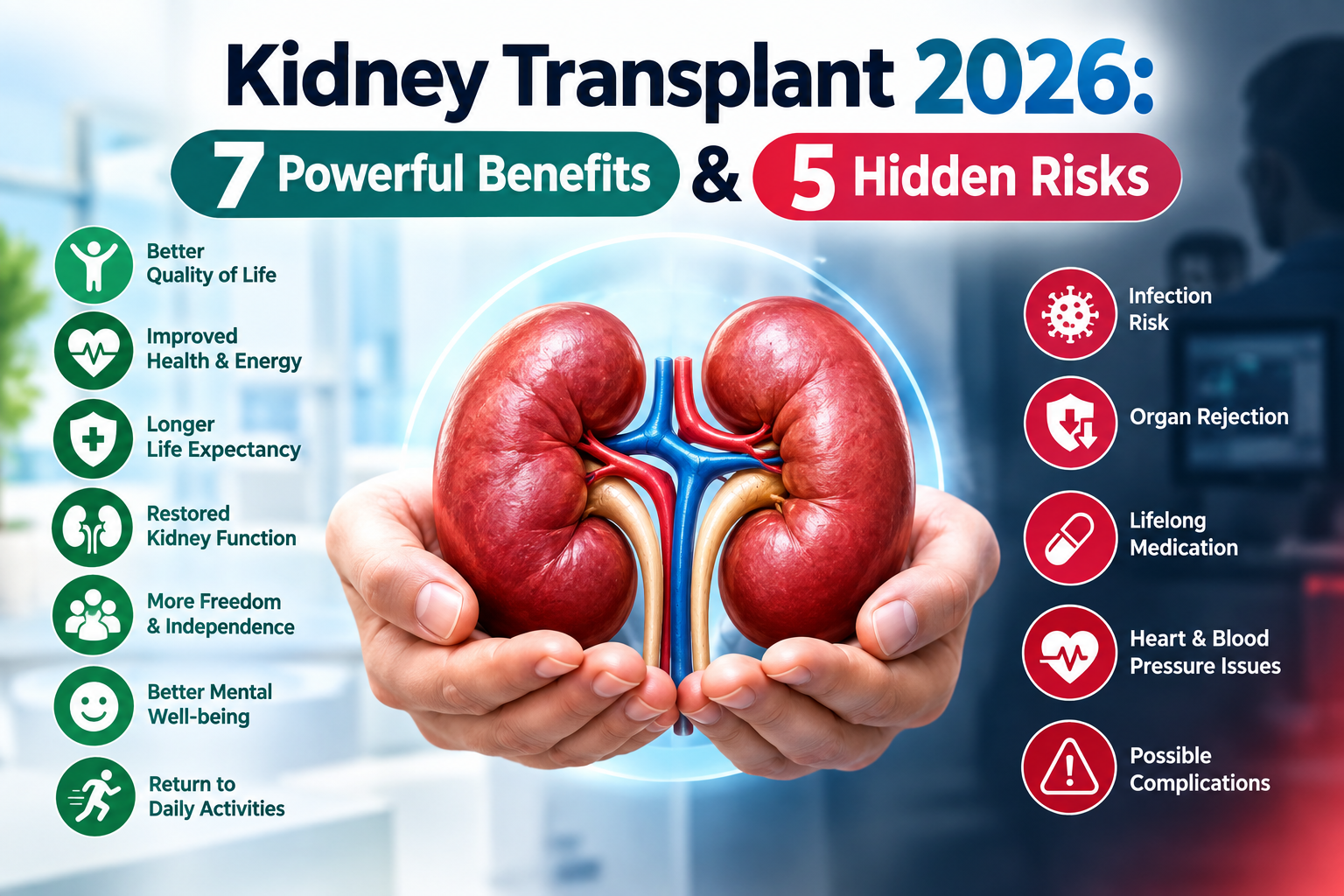

Kidney Transplant 2026 is becoming an important treatment option for people living with advanced kidney disease and kidney failure. A successful transplant can give a patient a working kidney from a living or deceased donor and may reduce the need for dialysis. At the same time, transplantation is a major medical procedure that requires lifelong follow-up and anti-rejection medicines. Understanding both the benefits and hidden risks can help patients have better conversations with their transplant team.
Table of Contents
- What Is Kidney Transplant 2026?
- Kidney Transplant 2026: 7 Powerful Benefits
- Kidney Transplant 2026: 5 Hidden Risks
- Recovery and Long-Term Care
- Future of Kidney Transplant 2026
- Conclusion
- FAQs
What Is Kidney Transplant 2026?
Kidney Transplant 2026 refers to current kidney transplantation care and the continuing improvements in transplant medicine. During the procedure, a healthy donor kidney is placed inside the body of a person whose kidneys can no longer work properly. The donated kidney can then perform important jobs such as filtering waste and extra fluid from the blood.
A donor kidney can come from a living person or from someone who has died and donated their organs. A living donor can sometimes make it possible to plan the transplant instead of waiting for a deceased-donor organ. The transplant team also performs medical tests and matching procedures before surgery to determine whether the donor kidney is suitable.
A kidney transplant is not considered a complete cure for kidney disease. After surgery, patients normally need regular medical care and medicines that help prevent the immune system from attacking the new kidney. Regular blood tests are also important because they can help doctors identify changes in kidney function early.
Kidney Transplant 2026: 7 Powerful Benefits
1. Kidney Transplant 2026 Can Reduce Dialysis Dependence
One of the biggest advantages of Kidney Transplant 2026 is that a successful transplant can remove the need for regular dialysis. Dialysis performs some of the filtering work that damaged kidneys can no longer do, but it can take significant time and affect a person’s daily routine.
When a transplanted kidney works successfully, it can filter waste from the blood and help control fluid levels. This can give eligible patients more flexibility compared with remaining on dialysis. However, the transplanted kidney still needs careful monitoring throughout the patient’s life.
2. Kidney Transplant 2026 May Improve Quality of Life
Another important benefit is the possibility of a better quality of life. People receiving dialysis often have strict schedules around their treatment. A functioning transplanted kidney can provide more freedom for daily activities.
Patients may find it easier to plan work, family activities and travel after recovery. They may also have fewer dietary restrictions than they had while receiving dialysis. The exact experience is different for every patient and depends on overall health and transplant function.
3. Kidney Transplant 2026 Can Restore Kidney Function
A healthy donor kidney can perform many of the functions that failed kidneys cannot perform effectively. It filters waste from the blood and produces urine, helping the body maintain a healthier balance of fluids and minerals.
This is one reason transplantation is often considered an important treatment for suitable patients with kidney failure. However, the new kidney does not automatically work perfectly in every case. Sometimes the kidney may take time to begin working after surgery, and temporary dialysis may be needed.
4. Kidney Transplant 2026 May Provide Greater Daily Freedom
Life with kidney failure can involve frequent medical appointments and treatment schedules. A successful transplant may reduce some of these limitations.
After recovery, patients can often return to many normal activities while continuing their medical care. The transplant does require responsibility, but the routine can be different from life on dialysis. This potential increase in flexibility is one reason many eligible patients consider transplantation.
5. Kidney Transplant 2026 Can Offer Fewer Dietary Restrictions
Diet is another area where transplantation may provide an advantage. People receiving dialysis often need to carefully manage certain foods, fluids and minerals.
After a successful kidney transplant, some dietary restrictions may become less strict. However, patients still need a healthy eating plan because medicines and other health conditions can affect nutrition, weight, blood pressure and blood sugar. A transplant dietitian can help create an appropriate plan.
6. Kidney Transplant 2026 Can Support Long-Term Health
For suitable patients, kidney transplantation can offer important long-term health benefits compared with remaining on dialysis. A functioning donor kidney can provide more natural kidney function than dialysis.
Research and clinical care continue to focus on improving transplant outcomes and reducing complications. Patient selection, donor matching, medication management and regular follow-up all play important roles in protecting the transplanted kidney.
7. Kidney Transplant 2026 Is Supporting More Personalized Care
Modern transplant care increasingly focuses on the individual patient rather than using exactly the same approach for everyone. Blood type, tissue matching, medical history, donor characteristics and other factors can influence transplant planning.
Better evaluation and monitoring can help doctors identify potential problems and adjust treatment when necessary. This personalized approach is an important part of the continuing development of Kidney Transplant 2026.
Kidney Transplant 2026: 5 Hidden Risks
1. Kidney Transplant 2026 Can Involve Organ Rejection
One of the most serious concerns after transplantation is rejection. The immune system naturally recognizes foreign material in the body and can attack a donated kidney.
Anti-rejection medicines, also called immunosuppressants, are used to lower this risk. Patients need to take these medicines exactly as prescribed. Regular blood tests can also help doctors identify possible problems before serious symptoms develop.
2. Kidney Transplant 2026 Can Increase Infection Risk
Anti-rejection medicines weaken parts of the immune system. This helps protect the transplanted kidney from rejection, but it can also make infections more likely.
Because of this risk, transplant recipients need regular medical monitoring. Symptoms such as fever, persistent cough, unusual wound drainage or other signs of infection should be discussed with the healthcare team promptly.
3. Kidney Transplant 2026 Requires Long-Term Medicines
A transplant does not mean that all medical treatment ends after surgery. Most recipients need anti-rejection medicines for as long as the transplanted kidney continues to function.
These medicines can cause side effects in some people. Depending on the medication, possible problems can include high blood pressure, changes in blood sugar, weight gain, infections and other complications. Doctors monitor patients and adjust treatment when needed.
4. Kidney Transplant 2026 Includes Surgical Risks
Kidney transplantation is major surgery, so it carries risks similar to other major operations. Bleeding, blood clots, infection and problems involving the connection between the transplanted kidney and urinary system can occur.
The medical team monitors patients closely during recovery. A new kidney may begin working immediately, but in some cases it can take several days or longer to function properly.
5. Kidney Transplant 2026 Does Not Guarantee a Permanent Result
A transplanted kidney can provide excellent function, but no transplant is guaranteed to last forever. The kidney can be affected by rejection, medical complications or the return of certain kidney diseases.
This is why long-term follow-up is essential. Patients need to continue taking their prescribed medicines, attend appointments and follow the transplant team’s advice even when they feel healthy.
Kidney Transplant 2026: Benefits and Risks Compared
| Area | Potential Benefit | Possible Risk |
|---|---|---|
| Dialysis | May reduce or eliminate dialysis | Transplant may not work immediately |
| Daily life | Greater flexibility | Regular medical visits remain necessary |
| Kidney function | A donor kidney can restore filtering function | Rejection can damage the new kidney |
| Diet | Often fewer restrictions than dialysis | Healthy eating is still important |
| Medicines | Medicines protect the new kidney | Anti-rejection medicines can cause side effects |
| Long-term care | Potentially better quality of life | Lifelong monitoring is required |
Kidney Transplant 2026: Recovery and Long-Term Care
Recovery after Kidney Transplant 2026 is different for every patient. After surgery, doctors closely monitor the new kidney and check blood tests to see how well it is functioning. Patients also learn how to take their medicines correctly and how to recognize possible warning signs.
The first weeks can require frequent medical appointments and medication adjustments. As recovery progresses, appointments may become less frequent, but follow-up remains important.
Patients also need to protect their overall health. Maintaining a healthy weight, following an appropriate diet, staying physically active when approved by the healthcare team and taking medicines consistently can support long-term care.
The most important part is communication with the transplant team. A patient should not stop or change anti-rejection medicine without medical advice because missed doses can increase the risk of rejection.
Kidney Transplant 2026: Simple Risk and Benefit Graph
The following graph is an illustrative article comparison, not a medical success-rate chart.
Kidney Transplant 2026: What Does the Future Look Like?
The future of Kidney Transplant 2026 is focused on improving patient selection, donor-recipient matching, medication management and long-term monitoring. Medical teams continue to study ways to reduce rejection and improve the lifespan of transplanted organs.
Living-donor transplantation is also an important area because a suitable living donor can sometimes shorten the waiting process and allow surgery to be planned. However, donor and recipient eligibility must always be carefully evaluated by a transplant center.
Better monitoring may also help doctors identify changes in kidney function earlier. Blood testing is already an important part of post-transplant care, and continued research may provide additional ways to detect problems before they become serious.
The future is promising, but transplantation remains a complex medical treatment. Patients should consider their individual health, risks and treatment options with a qualified transplant team.
Conclusion
Kidney Transplant 2026 offers major potential benefits for eligible patients with kidney failure. A successful transplant can reduce dialysis dependence, improve daily flexibility, restore kidney function and potentially provide a better quality of life.
However, the treatment also has hidden risks. Rejection, infections, medicine side effects and surgical complications can affect transplant outcomes. A transplant is therefore not the end of medical care. It is the beginning of a long-term treatment journey that requires regular monitoring and careful medication use.
For anyone considering transplantation, the best decision depends on individual health, donor availability and medical evaluation. A qualified transplant team can explain whether transplantation is an appropriate option and what risks and benefits may apply to that specific patient.
FAQs About Kidney Transplant 2026
What is Kidney Transplant 2026?
Kidney Transplant 2026 refers to current kidney transplantation treatment, patient care and developing approaches during 2026.
Can a kidney transplant remove the need for dialysis?
A successful kidney transplant can eliminate the need for dialysis because the new kidney can perform the filtering function. However, some patients may temporarily need dialysis if the transplanted kidney takes time to start working.
Is kidney transplant a permanent cure?
No. A transplant is a treatment for kidney failure rather than a guaranteed permanent cure. Patients generally need lifelong monitoring and anti-rejection medicines.
What is the biggest risk after kidney transplantation?
Rejection is a major concern. Infection, surgical complications and side effects from anti-rejection medicines are also important risks.
Can a living donor make transplantation easier?
A suitable living donor can sometimes reduce waiting time and allow the transplant to be planned in advance. The donor and recipient must both go through medical evaluation before the procedure.